




How does the input/output isolation of an industrial UPS work?
 Jun 27, 2025|
 Hey there! As an industrial UPS supplier, I often get asked about how the input/output isolation of an industrial UPS works. So, I thought I'd break it down in a way that's easy to understand.
First off, let's talk about why input/output isolation is so important in an industrial UPS. In industrial settings, there are all sorts of electrical disturbances, like voltage spikes, surges, and noise. These can wreak havoc on sensitive equipment. Input/output isolation acts as a barrier, protecting your valuable gear from these electrical nasties.
How It Works
An industrial UPS uses a transformer to achieve input/output isolation. The transformer has two coils: a primary coil and a secondary coil. The primary coil is connected to the input power source, while the secondary coil is connected to the output, which powers your equipment.

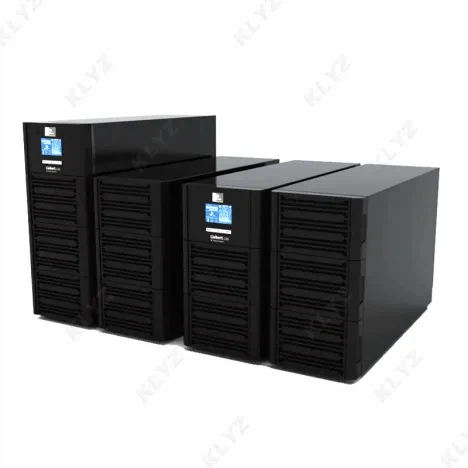
When an electrical current flows through the primary coil, it creates a magnetic field. This magnetic field then induces a current in the secondary coil. The key thing here is that there's no direct electrical connection between the primary and secondary coils. This physical separation is what provides the isolation.
Let's say there's a voltage spike on the input side. Because of the isolation, this spike doesn't directly transfer to the output. The transformer's design filters out the unwanted electrical noise and disturbances, ensuring that the power supplied to your equipment is clean and stable.
Benefits of Input/Output Isolation
One of the major benefits is protection against electrical interference. In industrial environments, there are lots of large motors, generators, and other equipment that can generate electromagnetic interference (EMI). Isolation helps to block this EMI from reaching your sensitive electronics, like control systems and data servers.
Another benefit is safety. By isolating the input and output, the UPS reduces the risk of electrical shock. This is especially important in industrial settings where workers may be in close proximity to the equipment.
Real - World Examples
We've got some great products in our lineup that showcase the importance of input/output isolation. Take the Vertiv Liebert APM2 300 600kva Modular UPS. This modular UPS is designed for large - scale industrial applications. Its input/output isolation feature ensures that even in the most demanding environments, your critical equipment stays up and running.
The Vertiv Liebert ITA2 1 40kva Lithium Fusion Solution UPS is another great option. With its advanced isolation technology, it provides reliable power protection for smaller industrial setups or areas where space is limited.
And then there's the Vertiv Liebert GXE2 Uninterrupted Power Supply (ups) 6 20KVA Online UPS. This online UPS offers excellent input/output isolation, making it ideal for protecting mid - sized industrial equipment from power disturbances.
Factors Affecting Isolation Performance
The performance of input/output isolation can be affected by several factors. The quality of the transformer is a big one. A high - quality transformer with proper insulation and design will provide better isolation.
The frequency of the electrical current also plays a role. In industrial applications, different frequencies may be used, and the UPS needs to be designed to handle these frequencies effectively to maintain good isolation.
The load connected to the output can also impact isolation. If the load is too large or has a high inrush current, it can stress the UPS and potentially reduce the effectiveness of the isolation.
Maintenance and Monitoring
To ensure that the input/output isolation of your industrial UPS continues to work effectively, regular maintenance is crucial. This includes checking the transformer for any signs of damage, such as overheating or insulation breakdown.
Monitoring the UPS's performance is also important. Many modern industrial UPSs come with built - in monitoring systems that can alert you to any issues with the isolation or other aspects of the UPS's operation.
Conclusion
Input/output isolation is a vital feature of industrial UPSs. It protects your equipment from electrical disturbances, ensures safety, and helps to maintain the reliability of your industrial operations. Whether you're running a small factory or a large - scale industrial complex, having a UPS with good input/output isolation is a must.
If you're interested in learning more about our industrial UPS products or need to purchase one for your business, we'd love to have a chat. Just reach out, and our team of experts will be happy to help you find the right UPS solution for your needs.
References
- "Industrial Power Systems Handbook" by John D. McDonald
- "Uninterruptible Power Supplies: Technology and Applications" by M. H. Rashid