

 Language
 Language
Our factory
Hebei Jinnuoda Communication Equipment Sales Co., Ltd. is a professional sales power supply, power module, UPS uninterruptible power supply and other products of the company. A wide variety of products, high quality, reasonable price, fashion design, widely used in communication engineering industry and other industries.
Quality assurance
We promise that the performance of all products are strictly tested and tested before shipment aging test, plus load test to ensure product quality and provide high-quality after-sales service. During the warranty period, we can always provide quality assurance and supply spare parts.
Delivery speed
Complete packaging to ensure products quality, and transport to the destination in the time.
Our service
We try and respond to all concerns within 24 hours and our teams are always at your disposal in case of any emergencies.
There are five main components of a DC Power System. Briefly described below, they are:
The rectifier/charger
This is an electrical device converting AC to DC power. Not only does it provide DC power, but it also charges backup batteries. The rectifier/charger is the hero of the system, and it’s what makes sure the system can continue to work when an unexpected electricity blackout occurs.
The controller
The controller is the component of a DC system that sends instructions to the other components within the system using communication protocols.
The batteries
Different DC power systems can use different kinds of batteries. Some of the most common types of batteries a DC system may use are VLRA batteries, wet cell batteries, lithium-ion batteries, or NICAD batteries. What type of battery a DC power system uses will depend on the specific application, and several other considerations, including the temperature within the building where the system is stored, available budget, and environmental concerns, among other things.
The distribution system
The distribution system is the part of the system that provides electricity for ultimate use. The distribution system may be external, or it may not be housed in the same area as the rectifier, but it is a separate component within the DC system.
The enclosure
There are so many different types of DC power system enclosures, and many are environment and/or application specific. Common enclosure designs include shelf mount and rack mount enclosures.
Let’s read about the function of the DC power system. A basic DC power system may be built with four sections with each one representing a specific circuit performing a unique task. It consists of different parts such as a transformer, rectifier, filter, and regulator.
Transformer
An AC signal is provided as an input to the transformer which is generated using a line voltage like power from an electric outlet. The main function of a transformer comprises of stepping down or stepping up of a signal to produce the desired DC level needed at the output of the power supply. It plays the role of an isolator as in numerous applications, it is important to isolate these input signals from the one generated internally by the device itself.
Rectifier
The signal received as output from the rectifier is further introduced as an input to the rectifier. A rectifier may be a half-wave or a full-wave rectifier and consists of a rectified pulsating DC signal. In this, the pulsating signal is a signal which is voltage or current that doesn’t change its polarity and has a magnitude as a function of time. The typical ones are constructed by using resistors and diodes.


Filter
A filter is required for converting the pulsating DC signal into a non-pulsating DC signal. Generally, a capacitor filter suffices and the output generated by it is DC voltage consisting of minor AC variations and ripples.
Regulator
A regulator generally has two functions which include smoothening the signal from the filter by producing a DC signal without any ripple and production of constant voltage at the output. The voltage available at the output of the regulator is constant even in the presence of variations. These variations may be present in the variations in the load or in the input voltage.
Planning Interval
Direct current (DC) power systems in telecommunications have an extended lifespan, with some systems still in operation for over 30-40 years. To ensure such longevity, designing these systems requires careful planning not only to meet initial requirements but also to provide flexibility and scalability for future expansion. Some components, like main buses, can be challenging to expand while in operation, so they are typically designed to handle the ultimate load requirements from the start. The planning interval for system design depends on the spe cific application and the expected lifespan of the equipment. These factors include determining both the initial planning interval and the ultimate planning interval. The initial interval is typically calculated by adding the current capacity requirements to an additional 2 or 3 years worth of growth projection. On the other hand, the ultimate planning interval accounts for a longer-term perspective, often spanning 10 to 20 years of expected growth.
Data gathering
While data gathering can often be a time-consuming and tedious task, it remains an essential activity. Many larger companies have specialized technical teams devoted to the collection and processing of planning data. From the perspective of a power system, these efforts yield valuable insights, including an estimation of the initial load, data regarding growth rates across the planning intervals, and an approximation of the ultimate load. It's important to note that various power system components may exhibit distinct requirements for both initial and ultimate loads, as well as differing planning intervals.
Key points to think about
Battery Maintenance –Space to replace complete batteries or individual cells or modules eventually, there should be space for lifting devices to remove the components and install new ones. Electrical codes (where applicable) and safety practices require a safe amount of workspace around energized equipment so the planner must take into account maintenance and installation aisle space. Remodeling may be required due to existing building spaces being inadequate in terms of structural strength or availability. Modification or expansion may be necessary for ventilation and air conditioning systems, as they may be inadequate for batteries and additional power system and network equipment.
Current Drain Studies
Predicting future load growth is often aided by historical load growth data. In modern power systems, various parameters are logged through built-in monitors, while external data loggers can be installed either permanently or temporarily in systems with accessible current shunts or data logging interfaces. Many contemporary DC power system controllers include integrated data loggers, which can be accessed through an interface.
Network Equipment Forecast
Company records typically contain readily available historic growth data of Network Equipment . Forecasts are created by projecting past growth and then comparing it with future requirements estimates.
Deployment of New Technologies
New technology equipment is typically more compact than its predecessors, albeit with a higher power consumption per unit volume. Examples of these new technologies include fiber-to-the-home (FTTH) and fiber-to-the-curb (FTTC), along with the associated infrastructure for delivering television and broadband services.
Maintenance Requirements
Old systems and equipment eventually become obsolete as they no longer meet current requirements, face challenges such as unavailability of replacement parts, or experience outdated software systems that are no longer supported and updated. Examples include rectifiers, voltage conversion devices, and power system controllers that are no longer aligned with current system needs.
Collocation Requirements
Network operators consider collocation as both a revenue source and a means of business collaboration. Power requirements for collocated equipment pose a challenging question: determining the necessary power can be complicated without detailed knowledge of future needs or at least a method for estimation.

Points to Consider When Selecting a DC Power System
Voltage and current requirements
When choosing a DC power system, the first thing you need to think about is the voltage and current needs of your application. You'll need to make sure that the power supply can provide enough voltage and current for your application.
Efficiency
Another important consideration is efficiency. The efficiency of power sources varies greatly, so choose one that is designed to be as efficient as possible. This will help to reduce energy costs and improve overall performance.
Size and weight
The power supply's size and weight are also important things to think about. If you don't have a lot of room, choose a power supply that is smaller and lighter. On the other hand, if size and weight are not important, you can choose a power supply that is bigger and heavier.
Cost
Of course, the cost is always a consideration when purchasing any type of product. Power supplies come in a variety of prices, so choose one that fits your budget.
Warranties and guarantees
When selecting a DC power system, keep warranties and guarantees in mind. Many companies provide warranties and guarantees on their products, so make sure the power supply you purchase includes one. If you consider these factors, you will be able to select the best DC power system for your needs.
When selecting a DC power system, one should consider the following specifications:
Constant Current and Constant Voltage Mode
DC power supplies with constant current and constant voltage modes are versatile and, thus, can be used in most applications.
Output
Another important specification to be considered is the power supply output. In general, the user should select a DC power system with an output greater than the requirement since most projects require the addition of new functionalities at the later stage of the design cycle.
Regulation
Regulation can mean load regulation or line regulation. Load regulation (usually 0.1% to 0.01%) is the amount of change in the output voltage when the load changes. Line regulation (usually 0.1% to 0.01%) is the amount of change in the output voltage when the input AC voltage changes.
Temperature
Most parts of a DC power system are temperature sensitive. Thus, one should consider checking the operating temperature range and temperature coefficient of the power supply. Ideally, a lab-quality power supply should have 0.05% /°C.
AC Input
Three-phase power is normally used by larger power supplies. These are more efficient than single-phase power supplies but with higher ripple frequency.
Other specifications include ripple and noise, tracking accuracy, and DC isolation.
Hebei Jinnuoda Communication Equipment Sales Co., Ltd. is a professional sales power supply, power module, UPS uninterruptible power supply and other products of the company. A wide variety of products, high quality, reasonable price, fashion design, widely used in communication engineering industry and other industries. Our products are widely recognized and trusted by users to meet the changing economic and social needs. Welcome new and old customers from all walks of life to contact us, create future business relations, create brilliant! We promise that the performance of all products are strictly tested and tested before shipment aging test, plus load test to ensure product quality and provide high-quality after-sales service. During the warranty period, we can always provide quality assurance and supply spare parts.

We're professional dc power system manufacturers and suppliers in China, specialized in providing high quality custom service. We warmly welcome you to wholesale cheap dc power system from our factory. For price consultation, contact us.
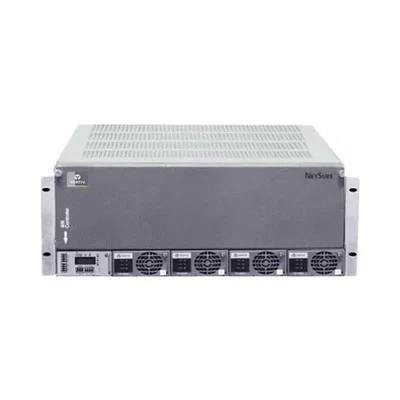
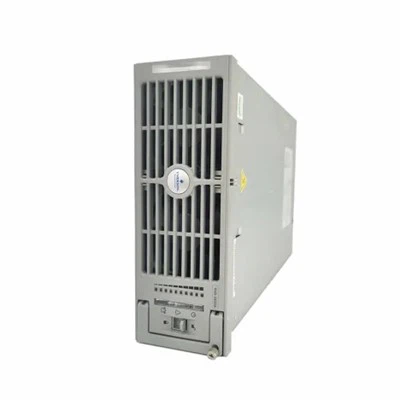
48V Rectifier Module Emerson Network Power Supply R48 3000E3, Power System 8U 450A, Power System 1U 60A(0/10)
